


If you run a UK service business, roofing, solar, home improvements, trades, clinics, agencies, you’ve probably felt it.
Leads aren’t “down”.
They’re just harder to win cheaply.
That’s because marketing budgets haven’t disappeared. They’ve shifted.
The companies growing fastest right now aren’t spending wildly. They’re consolidating spend into channels that produce measurable, high-intent enquiries, and cutting anything that feels busy but doesn’t convert.
Here’s what’s actually happening, and how it applies to service businesses in the UK.
Concentration beats diversification.
Usually, people think the safe marketing strategy is to “be everywhere”:
Post daily on social
Run some paid ads
Boost posts
Do a bit of SEO
Try some display ads
Maybe test radio or local sponsorship
It feels diversified. It feels safe.
But spreading budget thin across multiple channels often produces mediocre results everywhere instead of strong results somewhere.
The stats showcase that we are now seeing budget concentration across the board.
Businesses are doubling down on channels where buyer intent is strongest and measurable.
For UK service businesses, that almost always means:
Google Search
Retargeting
Email / follow-up systems
Conversion optimisation
Why?
Because someone searching “roof replacement quote Manchester” is infinitely more valuable than someone scrolling Instagram casually.
High-intent environments outperform broad reach every time when the goal is booked jobs, not awareness.
Broad reach is losing to precise intent.
The biggest shift isn’t from one channel to another.
It’s from broad reach to precise demand capture.
Social media hasn’t “stopped working”. But for service businesses, it’s increasingly competitive, algorithm-driven, and dependent on content production skill.
Most roofing companies are not media brands.
Most electricians don’t have a video team.
Most clinics don’t want to become entertainers.
Meanwhile, Google search remains brutally simple.
Someone types:
“Solar panel installers near me”
“Emergency plumber Birmingham”
“Loft conversion cost Leeds”
They want a solution now.
That’s why search demand capture continues to outperform most other acquisition methods for local service providers.
It’s not flashy.
It’s just aligned with buyer behaviour.
Measurability is a competitive advantage.
As tracking becomes harder across platforms, businesses are protecting spend in places where ROI is clearer.
For service businesses, that means:
Clear cost per enquiry
Clear cost per booked survey
Clear cost per job
If you can’t tie spend to enquiries and jobs, you’re guessing.
The businesses pulling ahead are the ones who can answer:
“How much does it cost us to generate one qualified enquiry?”
That’s why conversion tracking, call tracking, and proper landing page attribution matter more than ever.
If 30%+ of your marketing budget sits in channels you can’t measure properly, you’re exposed.
Retention and conversion matter more than traffic.
Another shift that’s often missed is this:
Traffic is harder to win. So squeezing more from existing traffic matters more.
For UK service businesses, this means:
Improving landing pages
Installing multi-step forms
Filtering intent before sales speak to prospects
Automating follow-up
If you’re paying £20–£40 per click in some service categories, you can’t afford weak conversion rates.
A well-structured conversion layer can increase enquiry rates without increasing ad spend.
That’s pure margin improvement.
The real problem for most service websites.
Most service websites in the UK fall into one of three categories:
Built years ago, rarely updated
Designed to “look good” but not convert
Relying heavily on referrals rather than active acquisition
They exist, but they don’t function as acquisition systems.
So when businesses try paid ads, they send traffic to a homepage with:
No clear offer
No focused landing page
No structured enquiry flow
No pre-qualification
Then they conclude ads don’t work.
In reality, the issue isn’t traffic.
It’s infrastructure.
What this means for UK service businesses.
If you’re running a local service business in 2026, the smart allocation strategy looks like this:
Anchor your budget in high-intent channels
Google Search should be your foundation if your service has search demand.
Build a strong conversion layer
Every click must land on a page built to convert, not just inform.
Install pre-qualification
Sales teams should speak to serious prospects, not tyre kickers.
Measure ruthlessly
Cost per enquiry, cost per qualified lead, cost per job.
Set aside a small testing budget
Allocate 10–15% to experiment with new tactics, but don’t destabilise what’s already working.
Example: Solar Installer in the UK
Old approach:
Rely on referrals
Run some boosted Facebook posts
Occasional leaflet drops
Modern structured approach:
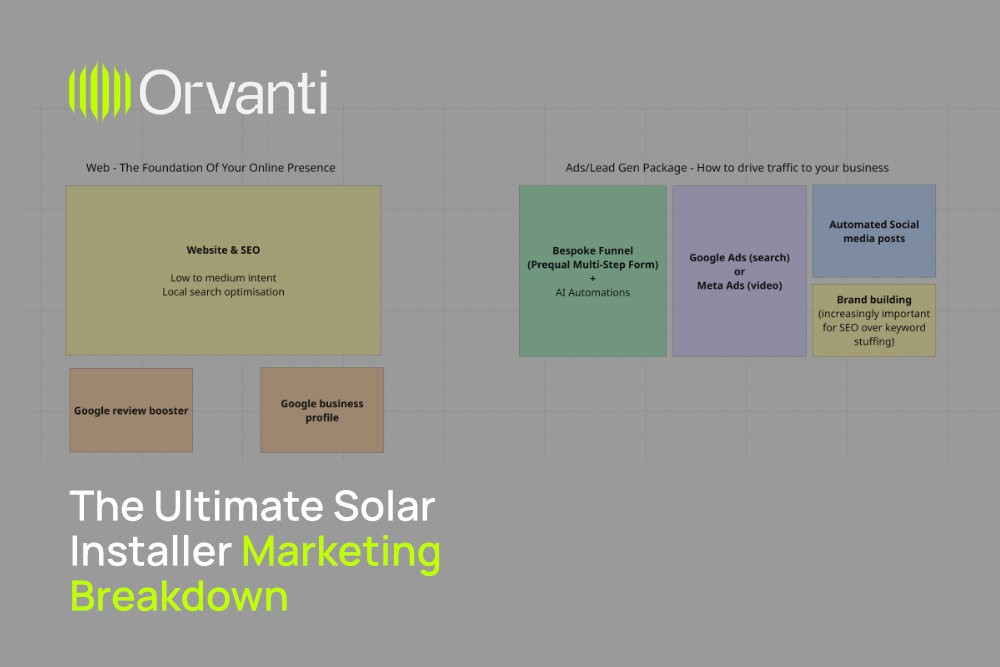
Capture “solar panel installation [location]” search demand
Route clicks to a focused landing page
Use a multi-step form to filter homeowners
Trigger automated SMS follow-up
Retarget visitors who didn’t enquire
The result:
Fewer wasted surveys. Higher close rates. More predictable pipeline.
Example: Roofing company in the Midlands.
Old approach:
MyBuilder leads
Checkatrade
Word of mouth
Modern approach:
Target “roof replacement cost [city]”
Use negative keywords to filter irrelevant searches
Send traffic to a dedicated roof replacement page
Pre-qualify by property type and urgency
Retarget non-enquirers
Stack authority and trust signals
Use enterprise level automations to fill any gaps
Now marketing becomes controlled rather than reactive.
The big takeaway.
Marketing budgets aren’t shrinking.
They’re concentrating.
They’re moving toward:
Clearer intent
Stronger measurability
Better conversion systems
Faster reallocation based on performance
The businesses winning right now aren’t louder.
They’re more structured.
They anchor spend in channels that drive enquiries, then optimise the systems behind those enquiries to improve quality and close rates.
That’s the shift.
And if you build around it, you don’t need to chase trends.
You just need to capture demand, convert it properly, and measure what matters.


Why Choose Orvanti?
Expertise You Can Trust
Our team brings years of industry experience to deliver high-quality ads, conversion and prequalification systems
Tailored Approach
We craft customised strategies that align with your unique business needs and financial objectives.
Data-Driven Insights
Our cutting-edge analytics and financial modeling ensure informed decision-making for long-term success.
Proven Results
We have a track record of helping businesses enhance financial efficiency, manage risks, and achieve their goals.