


Table of Contents
The Agency Charging Less That Was About to Lose Everything
The Number That Actually Matters
The Maths Nobody Shows You
What Happens When You Add Friction
What This Means for Solar Installers
The Conversation That Closes
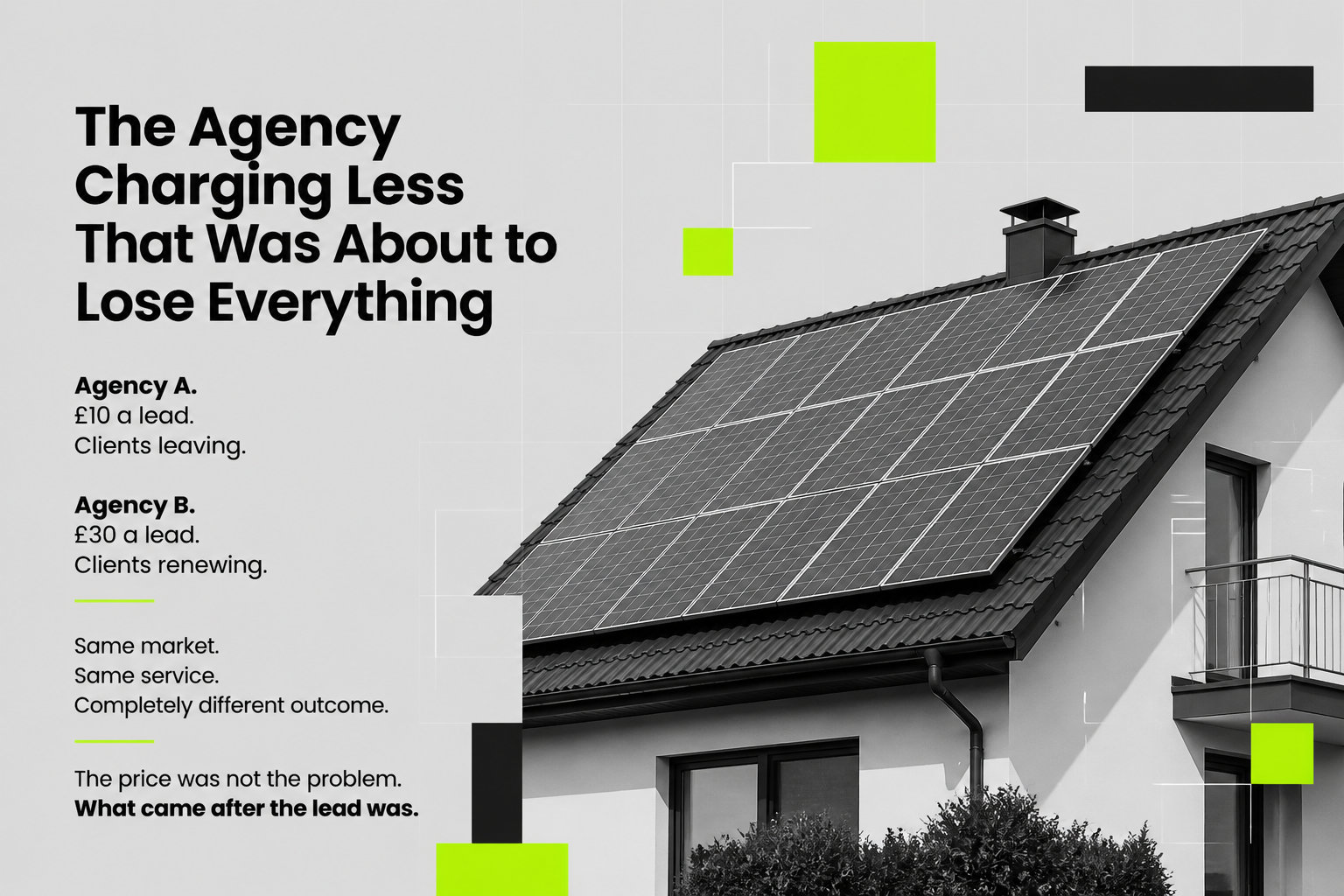
The Agency Charging Less Was About to Lose Everything
There is a pattern that plays out in marketing agencies more often than anyone admits.
Agency A charges £10 a lead. Agency B charges £30 a lead for the same service in the same market. Agency A's clients are unhappy and leaving. Agency B's clients are renewing.
The cheaper agency is not doing worse work. In most cases the ad performance is comparable. The difference is what happens after the lead is generated, and whether the agency has taken any responsibility for it.
Cheap leads look like a win on a report. To a business owner doing the maths on their actual revenue, they look like something else entirely.
Key points:
Low cost per lead does not mean good value for the client
Clients measure success in revenue, not in leads
An agency producing cheap leads that do not convert will lose the account regardless of what the report says

The Number That Actually Matters
Most agencies optimise for the metric they can control: cost per lead. It looks great on a report. The client sees a low number and assumes things are working.
What the client actually cares about is cost per sale. Every business owner is doing this maths in their head whether the agency realises it or not. They are not buying leads. They are buying revenue. The leads are just the mechanism.
When those two numbers are not connected in the agency's thinking, the relationship has an expiry date.
Key points:
Cost per lead is the metric agencies control, cost per sale is the metric clients care about
Clients who feel the gap between those two numbers will eventually do the maths out loud
Agencies that only report on CPL are hiding the part of the story that matters most

The Maths Nobody Shows You
Take a home renovation company running a basic funnel. Name, email, phone number, request a free quote. Nothing else.
Leads come in at £15 each. The client gets 100 a month. 20 pick up the phone. 5 show up to a consultation. 2 close.
That is £750 per closed deal on a £15,000 kitchen renovation. Stomachable, just about.
But the client is paying two full-time sales reps to chase the other 98 people who were never going to buy. They clicked a free thing, entered their details, and had zero buying intent. The reps are burnt out. The close rate looks terrible. And the overhead from chasing dead leads is quietly eating the margin on every job that does close.
The report still says £15 cost per lead. The report is lying.
Key points:
A £15 lead that closes at 2% costs £750 per sale plus the overhead of chasing the other 98
Sales rep time spent on unqualified leads is a hidden cost that never appears on the agency report
The close rate is not a sales team problem if the leads were never qualified to begin with
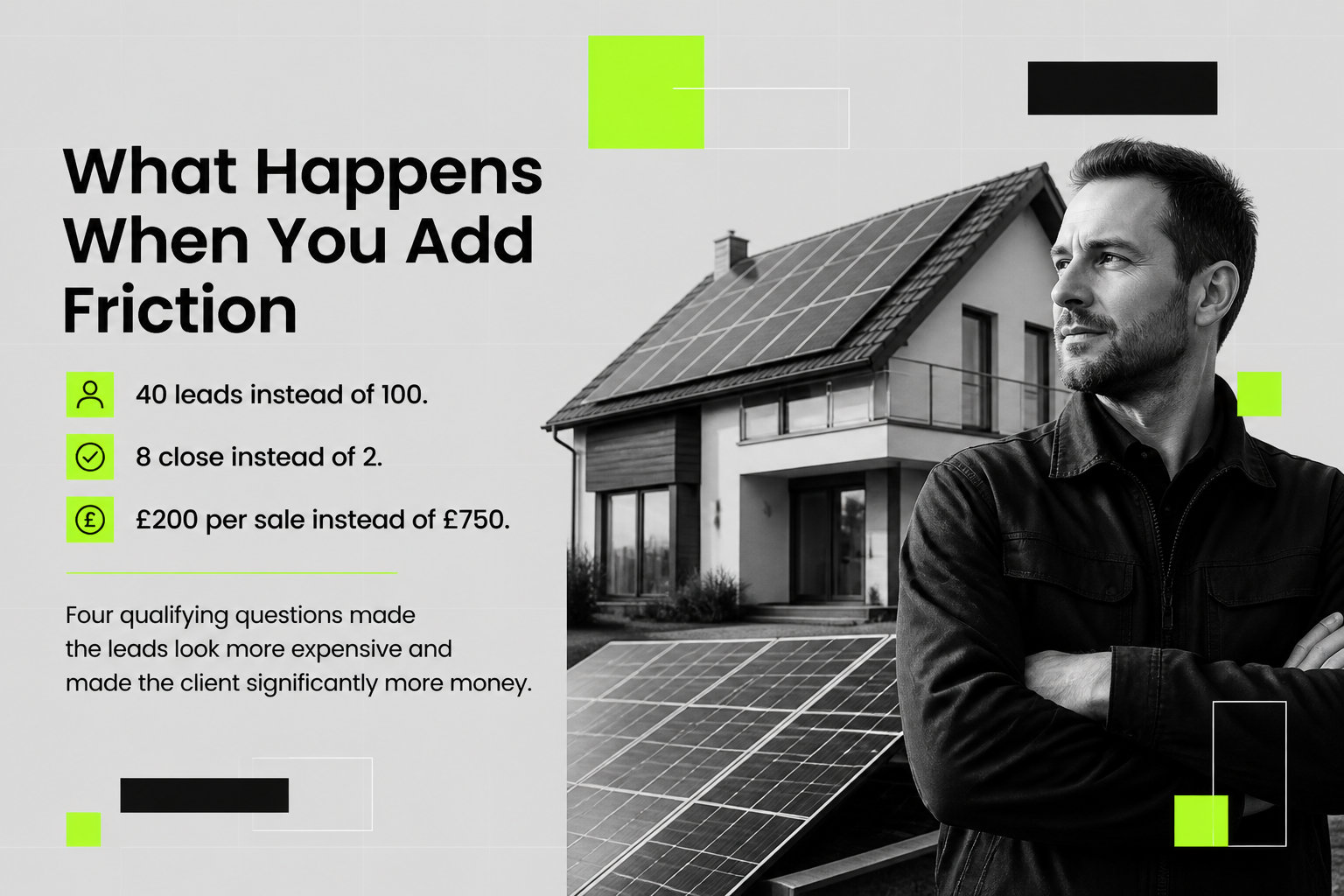
What Happens When You Add Friction
Run those same prospects through four questions before they become a lead:
What is your renovation budget? Are you the homeowner or renting? When are you looking to start? Have you had quotes before?
Cost per lead goes from £15 to £40. On paper it looks worse. In practice everything changes.
The client gets 40 leads a month instead of 100. 25 pick up the phone. 8 close.
That is £200 per closed deal. The leads coming through have budget, authority, timeline, and intent. The sales team is having real conversations instead of burning hours on people who entered their postcode for a free PDF and forgot about it by Tuesday.
The client is making more money from fewer leads and does not need to pay setters to do busywork. The agency looks like it got more expensive. The client got a pay rise.
Key points:
Adding qualification questions increases cost per lead but dramatically reduces cost per sale
40 qualified leads outperform 100 unqualified ones across every metric that generates revenue
The sales team's job becomes easier, faster, and more profitable when the leads are pre-screened

What This Means for Solar Installers
Solar is one of the worst industries for this problem. The average job value sits between £8,000 and £20,000. The sales cycle involves a site survey, a system design, finance conversations, and planning considerations. It is not a quick close.
A solar installer receiving 80 unqualified leads a month and closing 3 of them is spending roughly £2,700 per sale before you account for the time their team spent on the other 77. They are also building a reputation internally for Google Ads not working, which is not the ad platform's fault.
Run those leads through a qualification sequence first: property type, ownership, roof orientation, budget, timeline, whether they have had a survey before. The volume drops. The conversations that happen are with people who are genuinely ready. The cost per sale drops significantly and the installer stops dreading Monday morning.
Key points:
High job values make unqualified lead costs even more damaging in solar than in other industries
A qualification sequence filters for ownership, budget, and timeline before anyone picks up the phone
Fewer leads handled properly closes more jobs than more leads handled badly

The Conversation That Closes
The agency that can walk a prospect through this maths on a sales call closes at a completely different rate to the one bragging about £8 cost per lead.
Because the client has already done this calculation themselves. They just did not know how to articulate it. When you show them the cost per sale comparison, the qualified versus unqualified funnel, and what it does to their sales team's time, you stop being an expense and start being the reason the numbers work.
That is the conversation worth having. If you want to see how we build qualification into the front end of the system for solar installers, take a look at how Orvanti approaches it here.
Key points:
Clients who understand their cost per sale will always choose the agency that optimises for it
Showing the maths is the most effective sales tool available
Qualification built into the funnel is what separates a lead generation service from an acquisition system
The full approach is at orvanti.ai/solar-lead-system

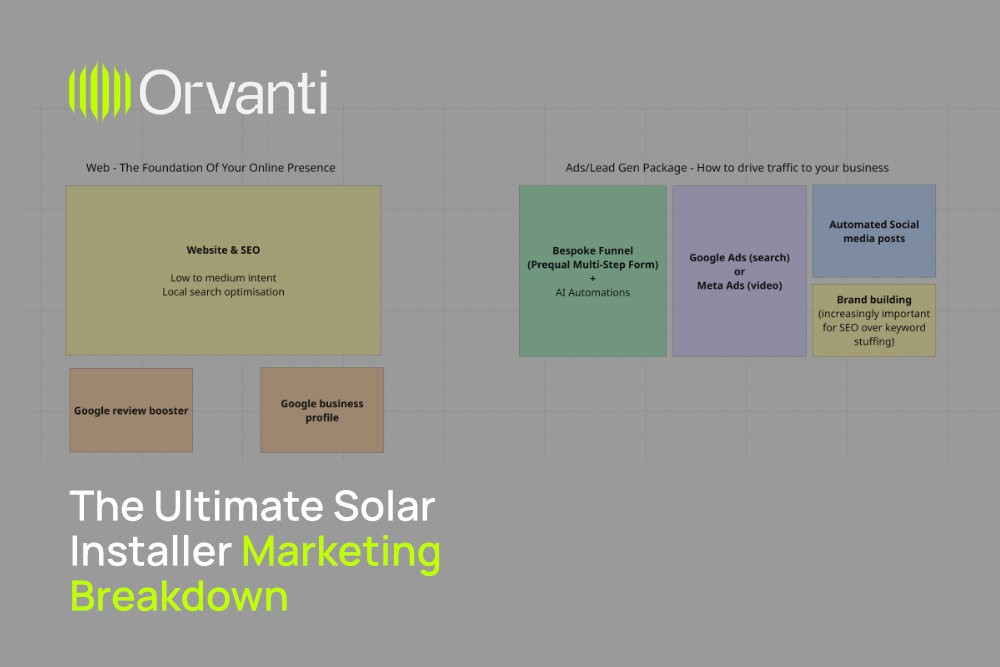

Why Choose Orvanti?
Expertise You Can Trust
Our team brings years of industry experience to deliver high-quality ads, conversion and prequalification systems
Tailored Approach
We craft customised strategies that align with your unique business needs and financial objectives.
Data-Driven Insights
Our cutting-edge analytics and financial modeling ensure informed decision-making for long-term success.
Proven Results
We have a track record of helping businesses enhance financial efficiency, manage risks, and achieve their goals.